Build a Residential Defensible-Space and Brush-Clearing Service
Identify the applicable local vegetation and fire rules for your own state, county, and city, complete five paid residential treatments, and prove with real records that the price covers labor, hauling, equipment wear, insurance, and green-waste disposal.
Free preview: 4 of 22 steps
Work through them in the real run view, exactly as a buyer does. No account, no payment, nothing saved.
3 free unlocks per month — yours to keep forever
No account needed — nothing is saved.
Included with every copy
- Your own copy — keep it forever
- Gets better over time — free updates included
- Run it on web and mobile
- Invite a partner to go through it with you — you share the same progress
- Make it your own — a private copy you can edit to fit your situation
- The playbook's community — ask questions, get additions, and see how other buyers improve it, right on the step
Who it's for
US residents in wildfire-prone communities with landscaping, construction, or outdoor-work experience who want to build a safety-focused field service with their own hands. The plan assumes one owner-operator with a truck or trailer; it is not written for established landscaping companies, and it requires the ability to do sustained outdoor physical work.
About this playbook
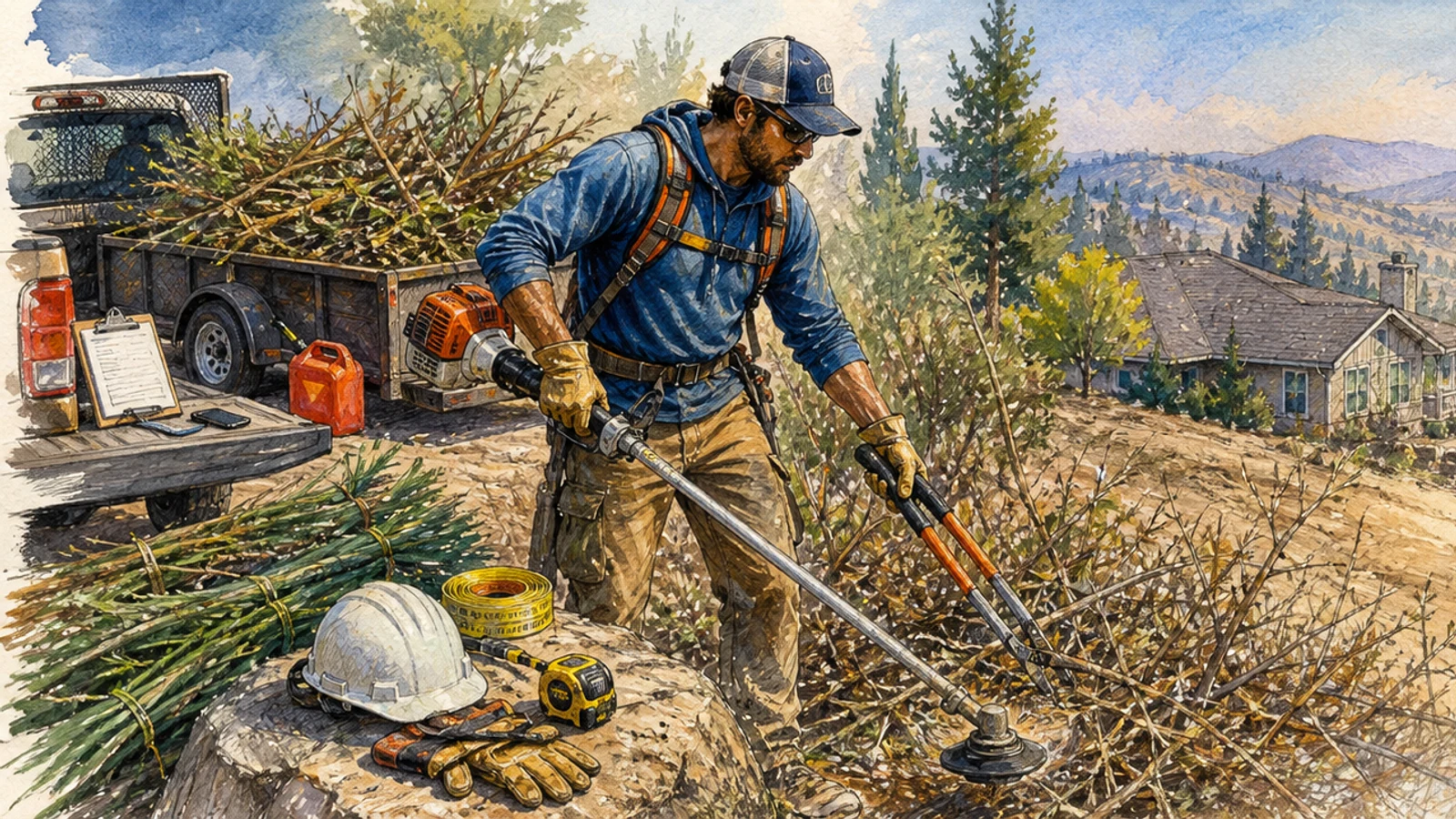
This guide turns a service idea into a working residential brush-clearing and defensible-space business in a wildfire-prone US community, without spending real money before anyone has said yes. You will test demand neighbor by neighbor, define one treatment and its price, and build the four tables — startup costs, monthly costs, break-even, and slow-season scenarios — that prove whether the arithmetic holds. Registration, licensing, and insurance come next, each found for the state, county, and city that govern your work rather than assumed from a national rule. The guide then lines up the money: your own capital, credit, and the US grant and cost-share programs that pay for this kind of work. It ends ninety days after opening day with a written decision read against your real numbers, not with a registration certificate. It does not cover tree felling, arborist work, chainsaw certification, or employment beyond the first hire.
What you'll do, step by stepFree preview
Only a sample is open: 4 of 22 steps can be read in full. The rest unlock when you buy.
Phase 1: Test demand before you spend a dollar
4 stepsPhase 2: Run the numbers before you register
4 stepsPhase 3: Register, license, and insure
4 stepsPhase 4: Fund the launch
3 stepsPhase 5: Win the first customers and run the work
4 stepsPhase 6: Judge the first 90 days
3 steps
Details
What you need first
Ability to do sustained outdoor physical work; a vehicle that can haul brush or access to a trailer; basic hand tools or the means to acquire them; startup savings in the USD 8,000–30,000 range or a clear plan to reach them; a phone and a computer for quoting, registration, and records; and a willingness to spend the first weeks talking to neighbors before selling anything.
Tags
Common questions
About the creator
Similar playbooks