Get your FAA Part 107 Remote Pilot Certificate and fly commercially
A Remote Pilot Certificate in hand and legal commercial operations running — the knowledge test studied for and passed at a testing center, the IACRA application filed and the certificate issued, aircraft registered, Remote ID and LAANC set up, and a flight-log system ready for recurring jobs.
Free preview: 4 of 22 steps
Work through them in the real run view, exactly as a buyer does. No account, no payment, nothing saved.
3 free unlocks per month — yours to keep forever
No account needed — nothing is saved.
Included with every copy
- Your own copy — keep it forever
- Gets better over time — free updates included
- Run it on web and mobile
- Invite a partner to go through it with you — you share the same progress
- Make it your own — a private copy you can edit to fit your situation
- The playbook's community — ask questions, get additions, and see how other buyers improve it, right on the step
Who it's for
Photographers, real-estate agents, surveyors, inspectors, videographers, and entrepreneurs in the United States who want to earn money with a drone and need the FAA Remote Pilot Certificate to do it legally.
About this playbook
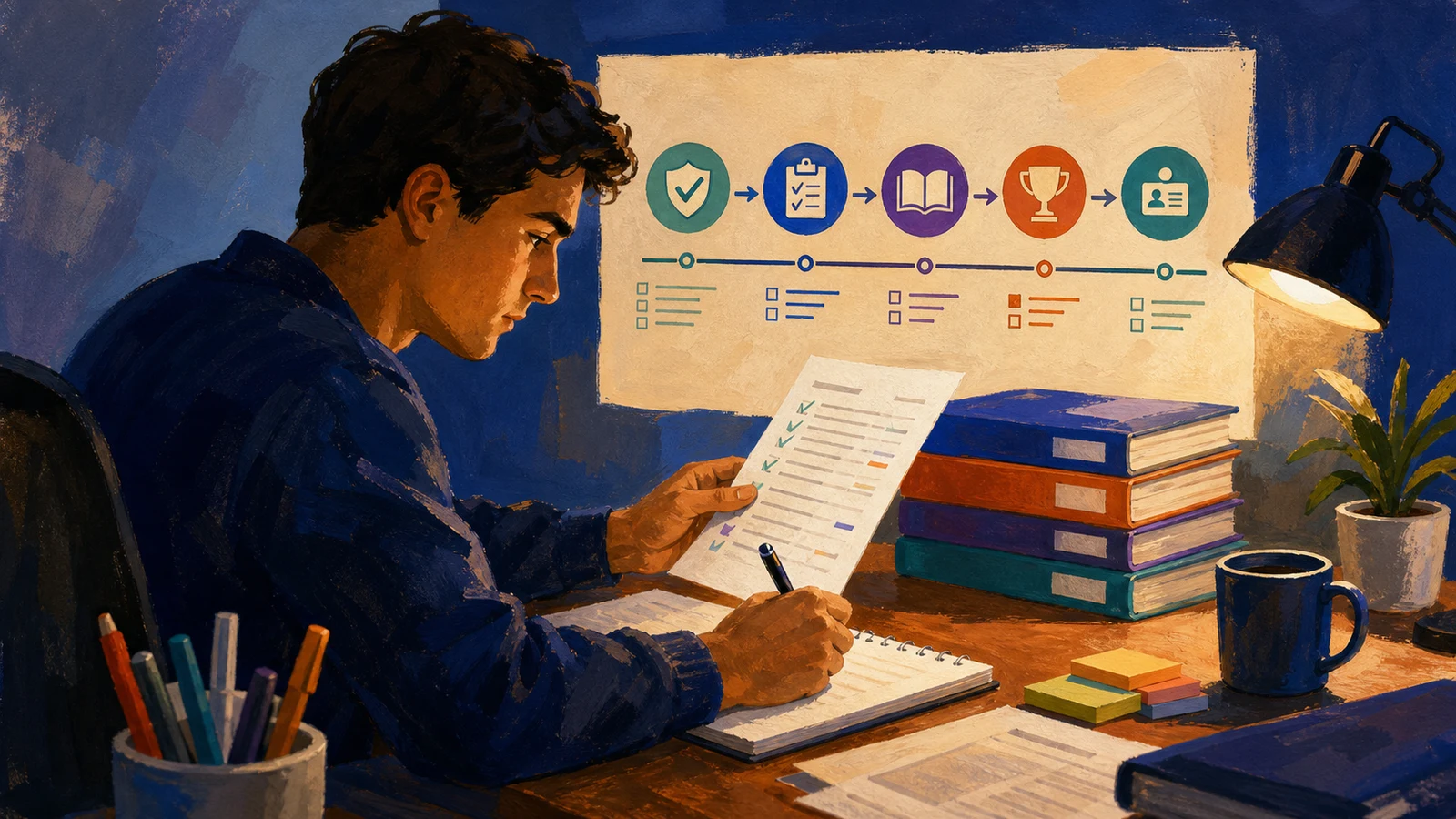
Pass the FAA Part 107 knowledge test, receive your Remote Pilot Certificate, and fly drones commercially in the United States. This guide uses only free FAA study materials and walks you from zero aviation knowledge through every step: studying airspace, weather, loading, and regulations; passing the UAG test at a PSI testing center; completing the IACRA application and TSA vetting; registering your drone and setting up Remote ID; and building a flight-log system with LAANC airspace authorizations. The final phase covers night operations, over-people categories, waivers for beyond-line-of-sight flight, and conducting your first paid job. The path takes roughly 24 hours of hands-on work across five phases, with waiting periods for the test appointment and certificate processing. It does not cover drone purchasing advice, Part 135 certification, or operations outside US airspace.
What you'll do, step by stepFree preview
Only a sample is open: 4 of 22 steps can be read in full. The rest unlock when you buy.
Phase 1: Build Your Knowledge Base
5 stepsPhase 2: Test Yourself to Readiness
4 stepsPhase 3: Pass the Exam and Get Certified
4 stepsPhase 4: Register Your Drone and Set Up Compliance
4 stepsPhase 5: Fly for Work
5 steps
Details
What you need first
You must be at least 16 years old, be able to read, speak, write, and understand English, be in a physical and mental condition to safely operate a small UAS, and have access to a computer with internet. No prior aviation or drone experience is required.
Tags
Common questions
About the creator
Similar playbooks