Inspect a Used RV Before You Hand Over the Deposit
Either a documented walk-away with the defects listed, or a purchase at a price reduced by the inspection findings, with fluid analysis results and a signed repair list before money changes hands.
Free preview: 4 of 24 steps
Work through them in the real run view, exactly as a buyer does. No account, no payment, nothing saved.
3 free unlocks per month — yours to keep forever
No account needed — nothing is saved.
Included with every copy
- Your own copy — keep it forever
- Gets better over time — free updates included
- Run it on web and mobile
- Invite a partner to go through it with you — you share the same progress
- Make it your own — a private copy you can edit to fit your situation
- The playbook's community — ask questions, get additions, and see how other buyers improve it, right on the step
Who it's for
First-time buyers of a $40k–$200k used motorhome or fifth-wheel who are being pressured to leave a deposit before a certified RV inspection can be scheduled. Also fits any buyer who wants to run their own screening pass before deciding whether to commission a professional NRVIA inspection.
About this playbook
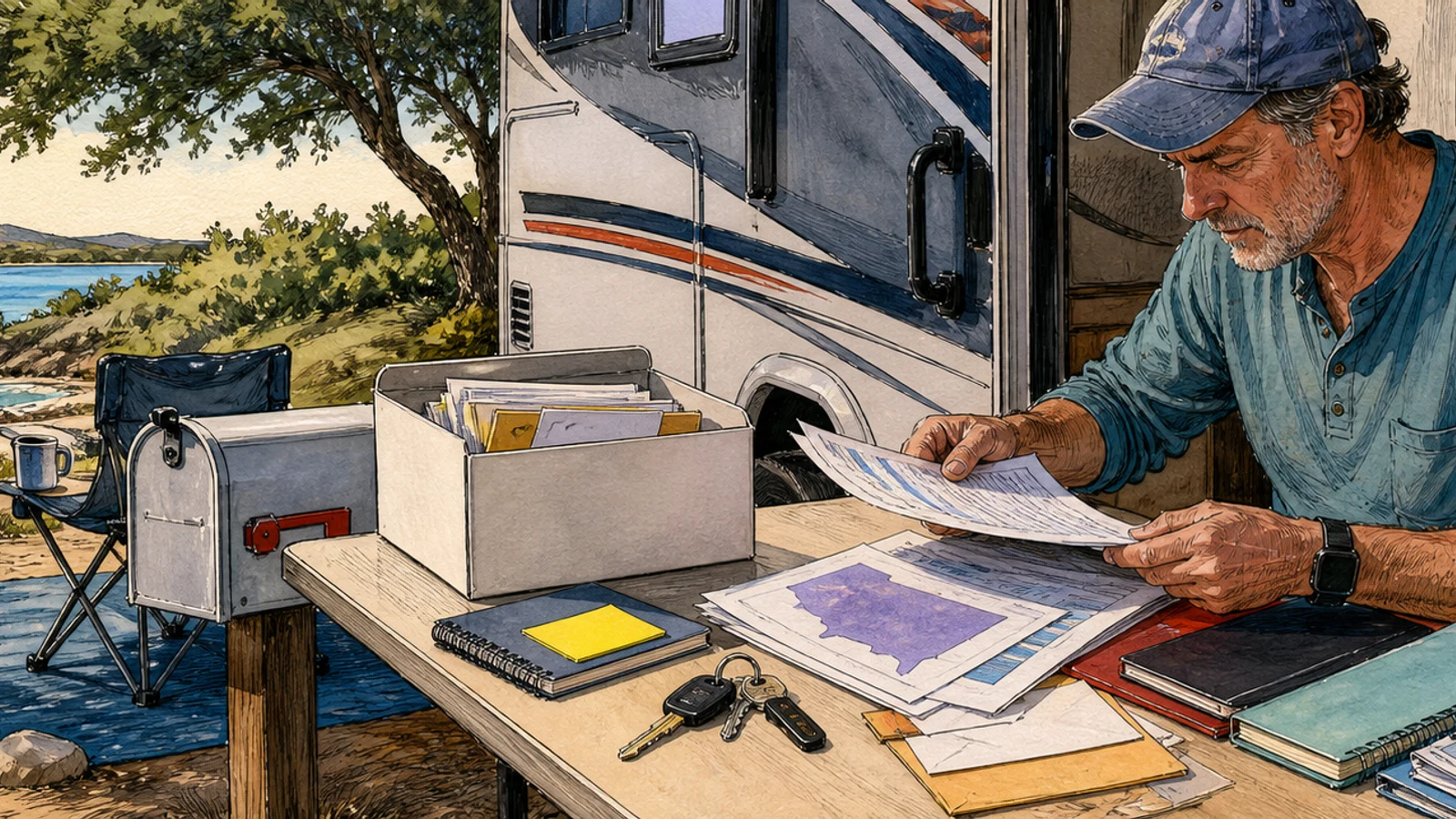
This guide takes a first-time RV buyer through a complete self-performed inspection of a used motorhome or fifth-wheel before committing a deposit. You check the roof, sidewalls, interior, water systems, propane, electrical, appliances, chassis, engine, generator, and tires — documenting every finding on a pass/fail basis. It covers one full day of on-site inspection plus a follow-up week when fluid-analysis results arrive. The final phase turns the compiled defect list into either a walk-away decision or a written price reduction with signed repair commitments. It does not cover test-driving, financing, insurance, registration, dealer negotiation tactics, or extended warranties. Content is specific to the US market and assumes basic mechanical aptitude.
What you'll do, step by stepFree preview
Only a sample is open: 4 of 24 steps can be read in full. The rest unlock when you buy.
Phase 1: Establish Ownership and Basic Facts
3 stepsPhase 2: Inspect Roof and Exterior Envelope
5 stepsPhase 3: Inspect Interior and Water Systems
4 stepsPhase 4: Test Propane, Electrical, and Appliances
4 stepsPhase 5: Inspect Chassis, Engine, Generator, and Collect Fluid Samples
4 stepsPhase 6: Document Defects and Decide
4 steps
Details
What you need first
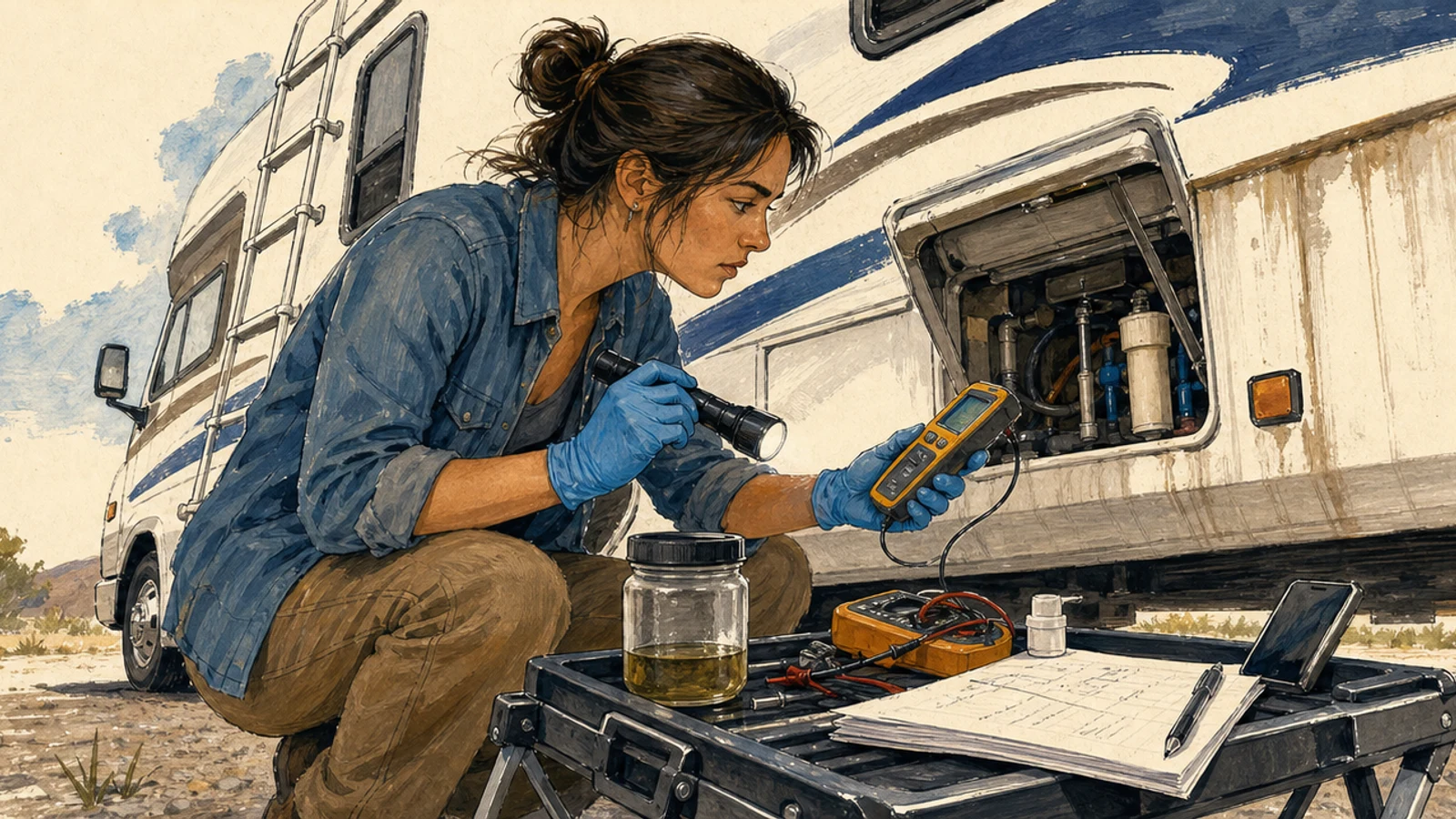
Access to the RV for at least 4 uninterrupted hours in daylight. Seller must have the unit on level ground, with shore power or a charged battery bank, propane topped off, and fresh water in the tank. You need a multimeter, a moisture meter, basic hand tools (screwdrivers, pliers, socket set), a flashlight, a smartphone for notes and photos, nitrile gloves, and clean sample jars for fluid collection.