Launch a legal home bakery under cottage food law
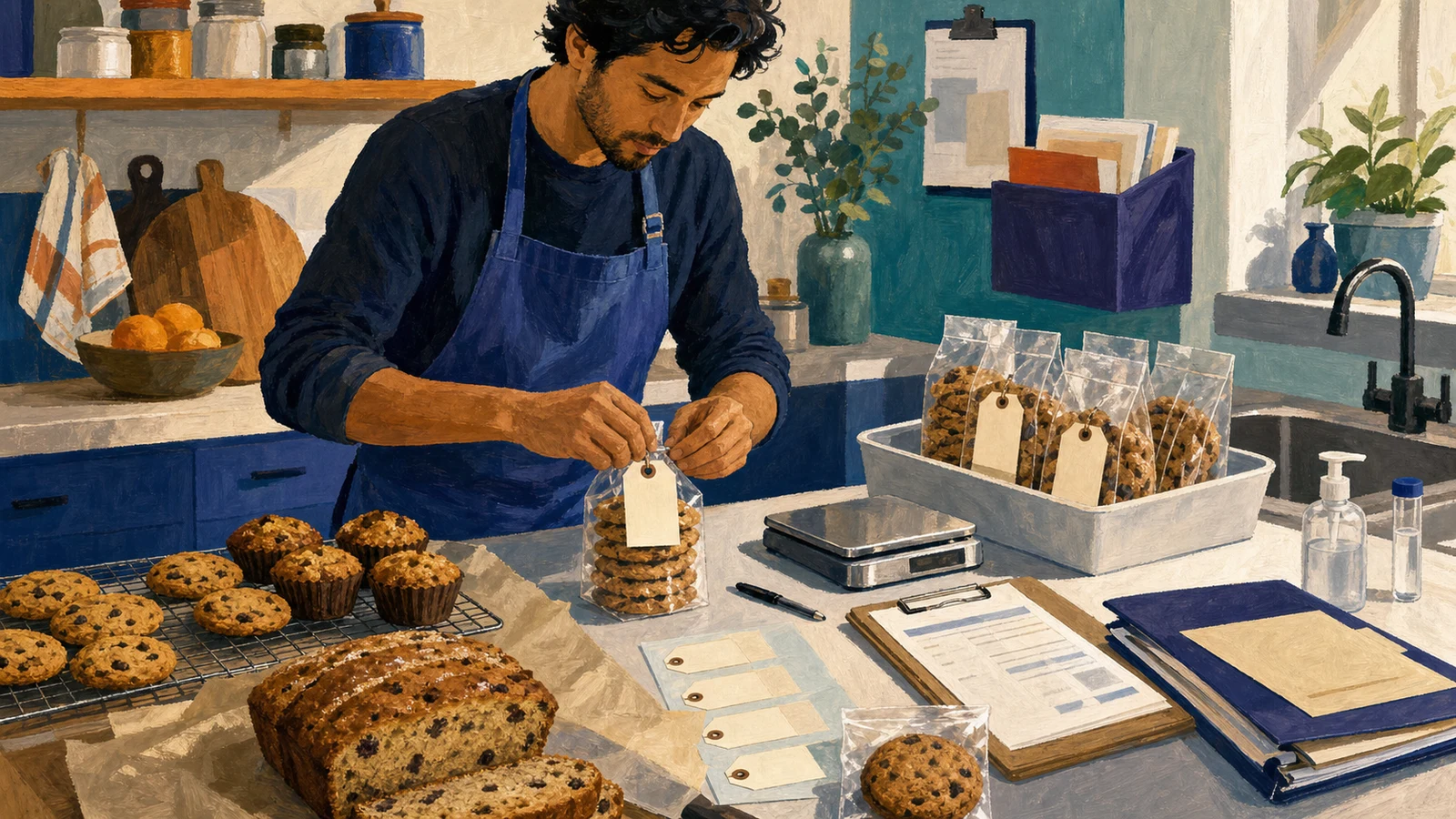
A home food business selling legally — products checked against your state's approved non-hazardous food list, the annual revenue cap understood, compliant labels formatted with net weight, ingredients, allergens and the state's mandatory disclaimer, a food handler certification earned, and the cottage food application filed with any required water test or kitchen inspection passed.
Free preview: 3 of 19 steps
Work through them in the real run view, exactly as a buyer does. No account, no payment, nothing saved.
3 free unlocks per month — yours to keep forever
No account needed — nothing is saved.
Included with every copy
- Your own copy — keep it forever
- Gets better over time — free updates included
- Run it on web and mobile
- Invite a partner to go through it with you — you share the same progress
- Make it your own — a private copy you can edit to fit your situation
- The playbook's community — ask questions, get additions, and see how other buyers improve it, right on the step
Who it's for
Home bakers, confectioners, and dry-goods artisans in the United States who want to sell at farmers markets, farm stands, or online without renting a commercial kitchen. It fits you if your intended products are shelf-stable baked goods that pass the approved-food test; it does not fit you if you plan to sell cheesecake, cream-filled pastries, or other potentially hazardous foods, which most states exclude from cottage food.
About this playbook
This guide takes a home baker from first idea to first legal sale under U.S. cottage food law, with no commercial kitchen required. You will learn which of your products are legal to sell from home, what your state caps your revenue at, and which agency to register with. You will earn a food handler certificate, prepare your kitchen, and file the application, then build labels that meet federal and state rules and open a sales channel that respects your state's limits. Because every state runs its own program, the path is built as a national spine with a rigorous state lookup at each step, and it names the states that restrict cottage food hardest so you can set expectations early. It does not cover commercial kitchen setups, wholesale or interstate distribution, nutrition analysis, or products that fail the non-hazardous test.
What you'll do, step by stepFree preview
Only a sample is open: 3 of 19 steps can be read in full. The rest unlock when you buy.
Phase 1: Know your state's cottage food rules
4 stepsPhase 2: Get certified and prepare your kitchen
4 stepsPhase 3: File the cottage food application
4 stepsPhase 4: Label and package to the standard
4 stepsPhase 5: Sell, track, and renew legally
3 steps
Details
What you need first
A working home kitchen separate enough to dedicate a food-prep area, a shortlist of products you intend to sell, a chosen business name (or a decision to sell under your legal name), a way to take an online course and pay a small filing fee, and patience for state processing windows. Confirm before starting that your state has a cottage food program, which every state does in some form.
Tags
Common questions
About the creator
Similar playbooks