Grow microgreens for restaurants and markets
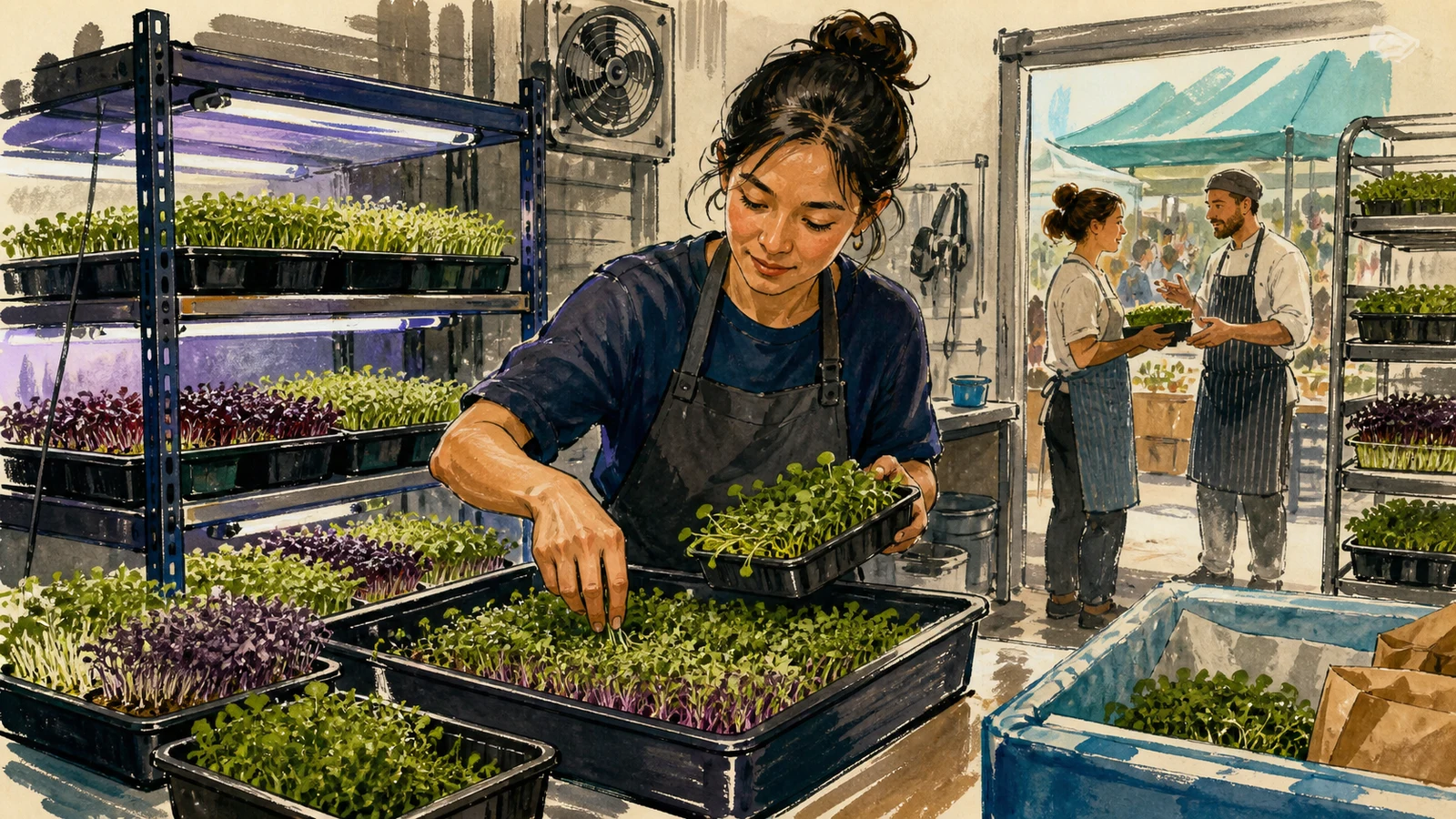
A rack system in a spare room or garage producing on a 10–14 day cycle, six varieties chosen by what chefs actually order, food-safety practices and any state produce registration handled, standing weekly orders from five restaurants, and a market stall absorbing the surplus.
Free preview: 4 of 25 steps
Work through them in the real run view, exactly as a buyer does. No account, no payment, nothing saved.
3 free unlocks per month — yours to keep forever
No account needed — nothing is saved.
Included with every copy
- Your own copy — keep it forever
- Gets better over time — free updates included
- Run it on web and mobile
- Invite a partner to go through it with you — you share the same progress
- Make it your own — a private copy you can edit to fit your situation
- The playbook's community — ask questions, get additions, and see how other buyers improve it, right on the step
Who it's for
Urban growers with $1,500–$8,000 in capital and a spare room, garage, or basement with reliable power, who want a food business without land and who can commit roughly 15 hours a week, concentrated on harvest days. It fits people who are willing to cold-call chefs before spending on equipment.
About this playbook
Turn a spare room into a microgreens operation that sells to restaurants and farmers markets. The guide is built around one rule: no racks and no production seeding until chefs have committed to standing weekly orders, because a 12-day crop with a five-day shelf life is worthless without a buyer. You will interview chefs, define the one-pound delivery and its price, and run the full arithmetic — startup costs, monthly costs, break-even, and three scenarios — before registering anything. The legal phase covers the LLC, the state produce registration that varies by state, a one-page food-safety plan, and local licensing and zoning. It closes past opening day: the first 90 days of real numbers read against the plan and the exit decision agreed in advance. It does not cover sprout production, outdoor growing, retail-scale supply contracts, or hiring staff.
What you'll do, step by stepFree preview
Only a sample is open: 4 of 25 steps can be read in full. The rest unlock when you buy.
Phase 1: Talk to chefs before you spend
4 stepsPhase 2: Define the product and the price
3 stepsPhase 3: Run the numbers before you register
4 stepsPhase 4: Paperwork: register, inspect, and license
4 stepsPhase 5: Fund the build without gambling
2 stepsPhase 6: Lock in the first customers
2 stepsPhase 7: Build the grow room and set the rhythm
4 stepsPhase 8: The first 90 days
2 steps
Details
What you need first
A spare room or garage with steady electricity and a temperature you can hold between about 60 and 75 degrees; $1,500–$8,000 you can afford to lose; about 15 hours a week of hands-on time; willingness to interview chefs by phone or in person; a nearby farmers market with open stalls.
Tags
Common questions
About the creator
Similar playbooks