Start a personal chef business cooking in clients' kitchens
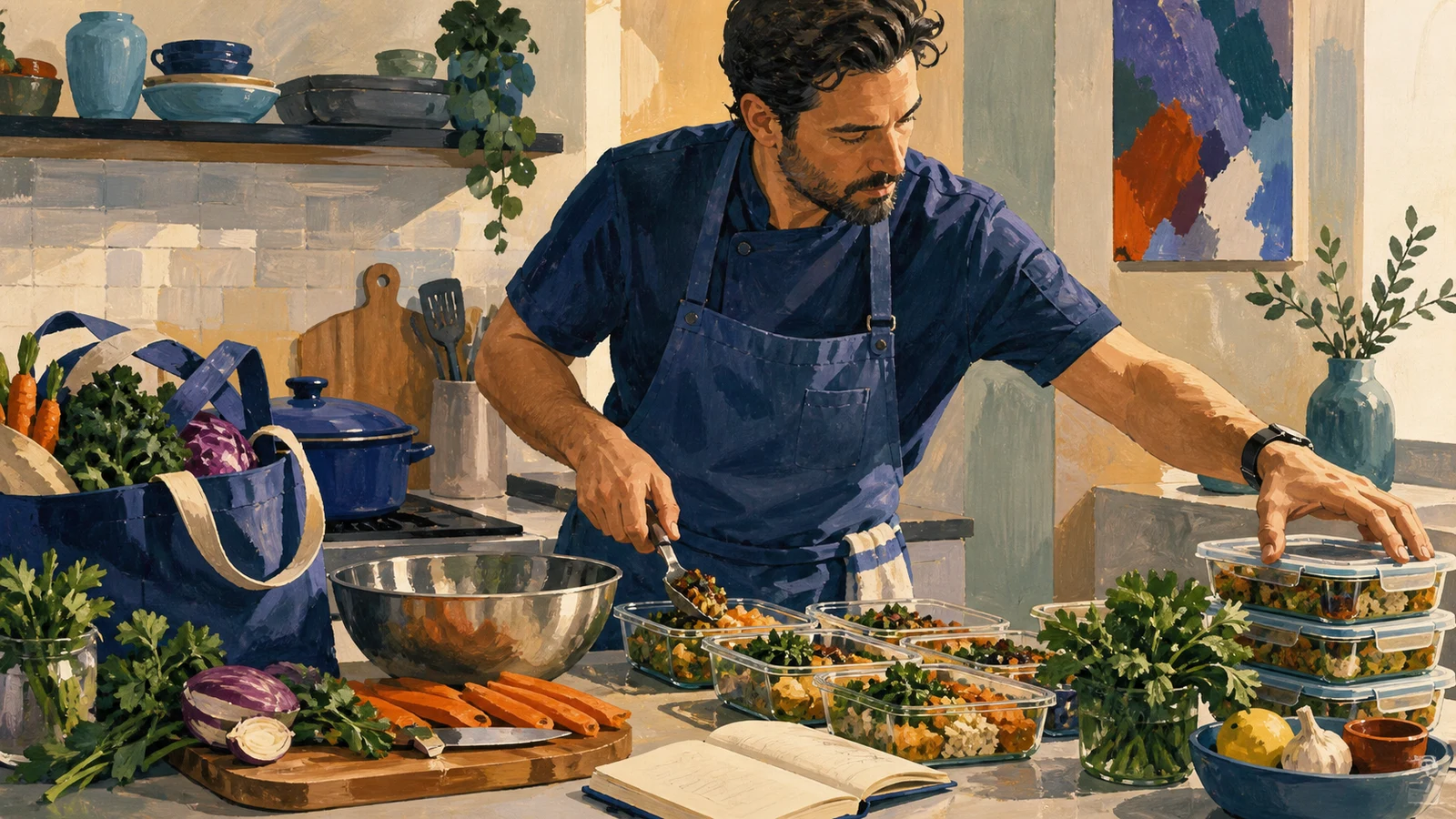
A weekly meal-prep service cooked in the client's own kitchen, priced per session including groceries, allergen and food-safety practices documented, five to eight standing weekly clients, and a legal structure that does not require a commercial kitchen.
Free preview: 4 of 25 steps
Work through them in the real run view, exactly as a buyer does. No account, no payment, nothing saved.
3 free unlocks per month — yours to keep forever
No account needed — nothing is saved.
Included with every copy
- Your own copy — keep it forever
- Gets better over time — free updates included
- Run it on web and mobile
- Invite a partner to go through it with you — you share the same progress
- Make it your own — a private copy you can edit to fit your situation
- 16 knowledge checks to test what you've learned
- The playbook's community — ask questions, get additions, and see how other buyers improve it, right on the step
Who it's for
Competent home cooks and trained cooks with under $2,500 to risk who want food-business income without the capital of a restaurant, a truck, or a licensed kitchen, and who are comfortable working in other people's homes.
About this playbook
Turn cooking skill into a weekly meal-prep service run inside clients' own kitchens — no restaurant, no truck, no commercial kitchen. You will first prove someone will pay, then define and price one session, run the numbers, verify the in-home cooking rule for your own state and county, register a single-member LLC, get food-handler certification and liability insurance, sign your first five weekly clients, and read the first ninety days against the plan. Everything is scoped to a start with $500–$2,500 of your own money and a single cook. The guide does not cover restaurants, catering, food trucks, or cottage-food businesses, where you prepare food at home and sell it elsewhere — that is the opposite model and a different license. Every state and county rule is checked locally rather than assumed, because that is where the line between licensed and not licensed is drawn.
Covers 2 situations
Did the paid trials meet the go/no-go count?
Which threshold did the 90 days hit?
The playbook asks you along the way and shows you only the steps that apply to you.
What you'll do, step by stepFree preview
Only a sample is open: 4 of 25 steps can be read in full. The rest unlock when you buy.
Phase 1: Proof that households will pay for weekly cooking
3 stepsPhase 2: One defined, costed and priced session with a card ready to send
4 stepsPhase 3: A funded plan with break-even and day-90 thresholds beside measured demand
5 stepsPhase 4: A dated GO or STOP answer that gates everything after it
2 stepsPhase 5: A licensed, certified, insured single-cook business ready to bill
5 stepsPhase 6: Five standing weekly clients served with documented safety and intake
4 stepsPhase 7: A dated keep, raise, expand or close decision with next-quarter targets
2 steps
Details
What you need first
Readers record every value in the step note as they go. Keep grocery receipts, the county and state written replies, the food-handler certificate, the formation certificate, the EIN letter and the liability policy with the plan.
Tags
Common questions
Glossary
- FoodSafety.gov
- The federal consumer website that publishes current safe minimum internal temperatures and other food-safety guidance. The guide directs you to confirm probe targets there and to check every protein during sessions.
- FDA Food Code
- The model food code published by the U.S. Food and Drug Administration that states and counties adopt as the baseline for handling, temperature, labeling, cooling and storage rules. The guide keeps it beside the cost and procedure sheets as the reference for practice.
- IRS business mileage rate
- The standard rate the Internal Revenue Service sets for deducting business miles driven, which the guide applies to value transport for grocery shopping. For 2026 the guide notes the rate cited in its table.
- USDA food plans
- Cost estimates published by the U.S. Department of Agriculture for groceries at different household sizes and spending levels. The guide uses them to sanity-check the grocery total for a typical household.
- ServSafe Food Handler
- A state-recognized food-handler training and certificate program covering hygiene and safe handling, delivered online with an assessment. The guide lists it as an example of an accredited course that satisfies the food-handler certificate step.
- LLC
- Limited liability company, a state business entity that separates business debts from personal assets. The guide files it with the Secretary of State before obtaining an EIN and notes it does not authorize food preparation by itself.
- Secretary of State
- The state office that registers business entities, checks name availability, and collects the filing fee and recurring annual report fee. The guide directs you to confirm the fee and file articles of organization there.
- Registered agent
- The person or service designated to receive legal and official mail for the LLC and whose address appears on the public register. The guide lets you act as your own agent or pay a service for the first year.
About the creator
Similar playbooks