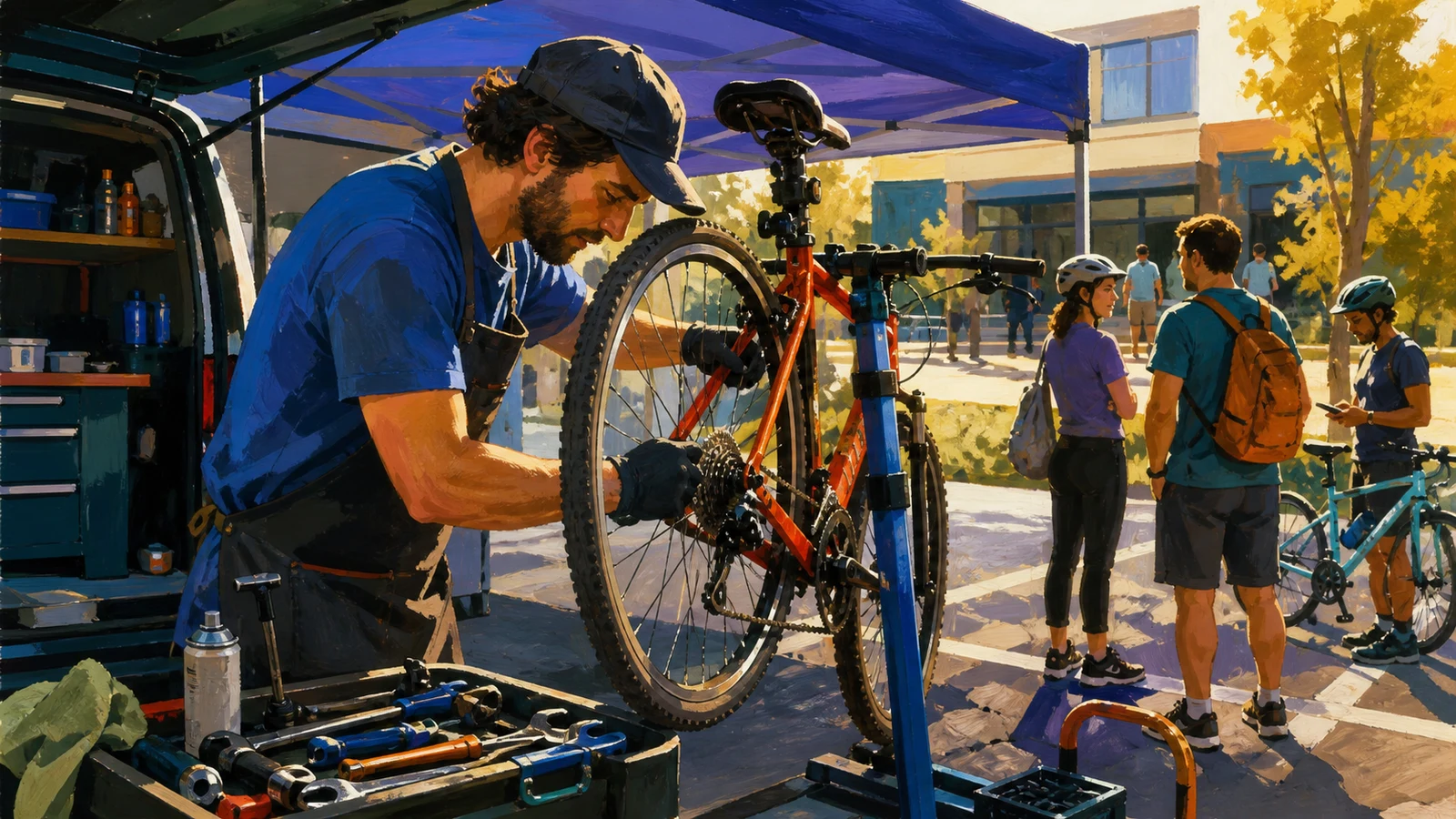
Launch a Mobile Bicycle Tune-Up Route for Workplaces and Campuses
Run three pop-up service days, complete 25 paid tune-ups, and determine whether clustered bookings produce a better hourly margin than individual house calls.
Free preview: 4 of 25 steps
Work through them in the real run view, exactly as a buyer does. No account, no payment, nothing saved.
3 free unlocks per month — yours to keep forever
No account needed — nothing is saved.
Included with every copy
- Your own copy — keep it forever
- Gets better over time — free updates included
- Run it on web and mobile
- Invite a partner to go through it with you — you share the same progress
- Make it your own — a private copy you can edit to fit your situation
- The playbook's community — ask questions, get additions, and see how other buyers improve it, right on the step
Who it's for
US bicycle enthusiasts with basic repair skills who want to test a mobile service without immediately leasing a retail workshop. It fits riders who can work outdoors at employer and campus sites, have a vehicle or cargo setup that carries a work stand and parts box, and can commit the outreach evenings plus three full service days spread over roughly three months.
About this playbook
This guide takes a bike mechanic with basic repair skills from idea to a running mobile tune-up route for workplaces and campuses. You test demand before spending real money, build a three-tier offer priced against your own measured time, and run the numbers that tell you when to keep going and when to stop. The business is registered as a single-member LLC only after the demand is proven, with the licenses and insurance that hosts will accept. The path ends past opening day: three pop-up service days, 25 paid tune-ups, and a day-90 reading of your real numbers against the plan. It does not cover opening a retail workshop, frame or e-bike high-voltage work, or hiring beyond a part-time second mechanic.
What you'll do, step by stepFree preview
Only a sample is open: 4 of 25 steps can be read in full. The rest unlock when you buy.
Phase 1: Test the demand before spending real money
5 stepsPhase 2: Build the offer and set the prices
3 stepsPhase 3: Run the numbers that keep you honest
4 stepsPhase 4: Register, license, and insure the route
4 stepsPhase 5: Fund the launch and line up the first customers
3 stepsPhase 6: Run the route and decide at day 90
6 steps
Details
What you need first
You can complete a standard tune-up — brakes, gears, chain, and a basic wheel true — on your own bike without supervision. You have or can borrow the basic repair tools, have a way to carry a stand and parts box around your city, and can put $3,000–$12,000 at risk. You are willing to call and email strangers about booking a service day.