Start a Mobile Bicycle Tune-Up Pop-Up Business
A tested mobile tune-up operation: a fixed-price service menu, a formed single-member LLC with EIN, sales-tax registration, permits and insurance cleared for each site, signed workplace or apartment pop-ups delivered, and a written expand, adjust, or stop decision made at twenty paid tune-ups using measured travel, labor, and cost numbers.
Free preview: 4 of 25 steps
Work through them in the real run view, exactly as a buyer does. No account, no payment, nothing saved.
3 free unlocks per month — yours to keep forever
No account needed — nothing is saved.
Included with every copy
- Your own copy — keep it forever
- Gets better over time — free updates included
- Run it on web and mobile
- Invite a partner to go through it with you — you share the same progress
- Make it your own — a private copy you can edit to fit your situation
- The playbook's community — ask questions, get additions, and see how other buyers improve it, right on the step
Who it's for
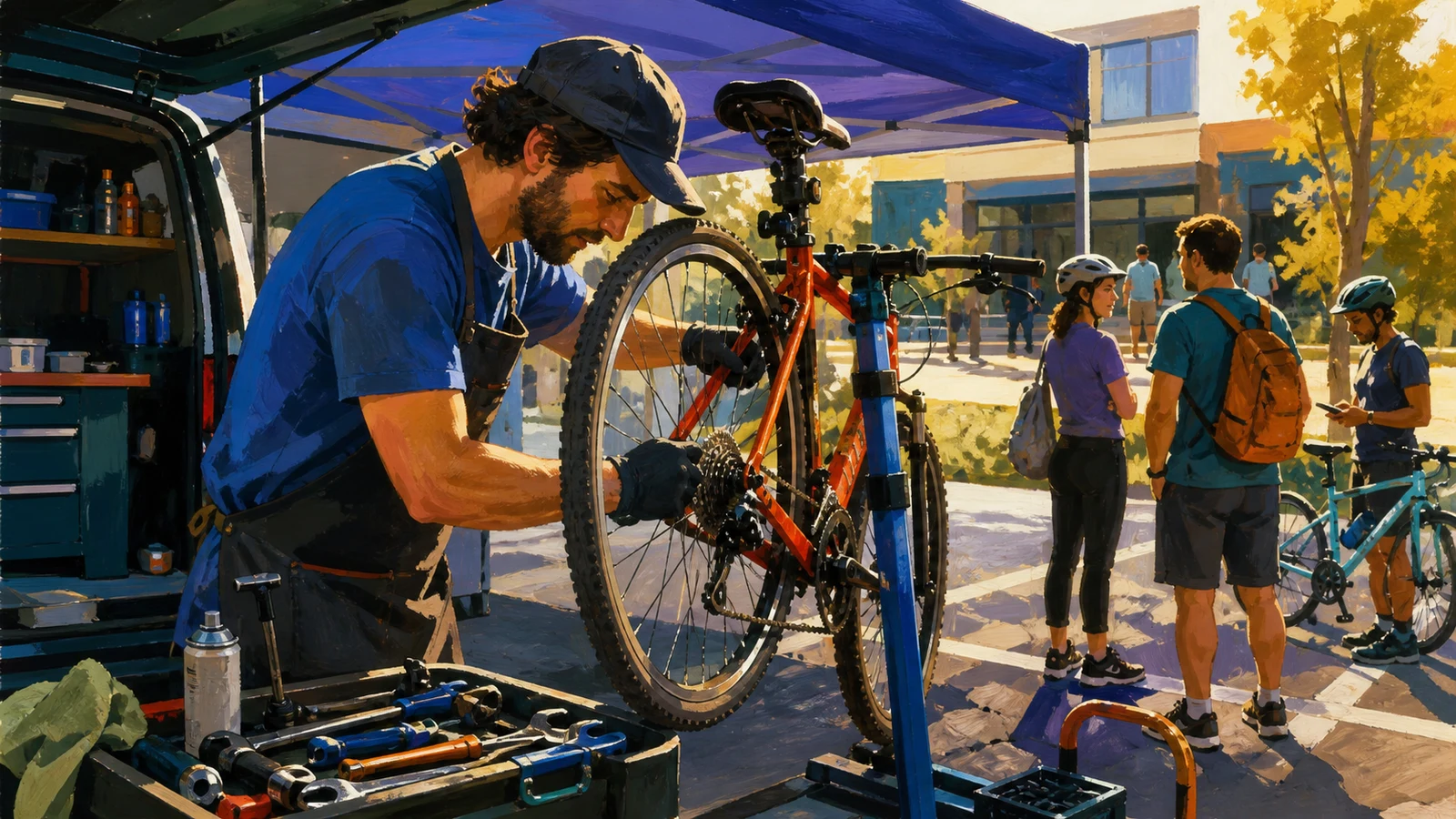
U.S. bicycle enthusiasts with solid home-maintenance skills — brakes, drivetrains, wheel truing — who own or can borrow a vehicle or cargo bike able to haul a stand and tools, and who want to test a mobile service business on evenings and weekends before ever considering a shop lease.
About this playbook
This guide takes a competent home mechanic from an idea to a verdict. It opens with cheap demand tests — named host prospects, rider price checks, refundable founding offers — so the expensive mistakes happen on paper first. The middle builds the arithmetic: what one tune-up truly costs, what the rig and each operating month cost, how many jobs break even, and how much cash is genuinely at risk. Only then does it walk the paperwork: the state LLC filing, the free IRS EIN, sales-tax registration, the city-by-city permits each pop-up site needs, and insurance sized to host requirements. The last stretch books real workplace and apartment events, runs them to a logged rhythm, and closes with the decision that was agreed in advance: expand, adjust the menu or price, or stop at twenty paid tune-ups. It does not cover shop leases, hiring a crew beyond the second-mechanic decision, or e-bike battery work.
What you'll do, step by stepFree preview
Only a sample is open: 4 of 25 steps can be read in full. The rest unlock when you buy.
Phase 1: Prove riders will pay before building anything
3 stepsPhase 2: Fix a narrow menu and a defensible price
3 stepsPhase 3: Price the rig and find the break-even point
5 stepsPhase 4: Form the LLC and clear every permit your sites need
5 stepsPhase 5: Insure the work and book the first pop-ups
3 stepsPhase 6: Run the pop-ups and keep score from day one
3 stepsPhase 7: Read the real numbers and make the day-90 call
3 steps
Details
What you need first
Confidence performing a standard tune-up unsupervised; a car, van, trailer, or cargo bike capable of carrying a work stand and toolkit; a smartphone for photos, payments, and booking; a few hundred dollars of at-risk pocket money for validation and state filing fees, with $4,000–$15,000 available for the full buildout if the numbers justify it; and enough schedule control to staff weekend or workplace-hours events.