Tornado Country: Safe Rooms and Storm Shelters, Decided and Funded
You hold a defensible shelter decision: the FEMA and ICC 500 criteria understood well enough to judge any product or room, a chosen option among in-residence, buried and community shelters, a funded path built from real prices, state rebates and federal grants, and a warning-and-drill setup plus insurance confirmation that makes the investment usable.
Free preview: 4 of 24 steps
Work through them in the real run view, exactly as a buyer does. No account, no payment, nothing saved.
3 free unlocks per month — yours to keep forever
No account needed — nothing is saved.
Included with every copy
- Your own copy — keep it forever
- Gets better over time — free updates included
- Run it on web and mobile
- Invite a partner to go through it with you — you share the same progress
- Make it your own — a private copy you can edit to fit your situation
- The playbook's community — ask questions, get additions, and see how other buyers improve it, right on the step
Who it's for
Homeowners in Tornado Alley and the Southeast who currently ride out warnings in an interior hallway or bathroom and own a site-built house on a foundation. It fits readers deciding between converting a room, buying a manufactured shelter, or relying on a community safe room, including anyone building a home who wants the shelter specified before framing starts.
About this playbook
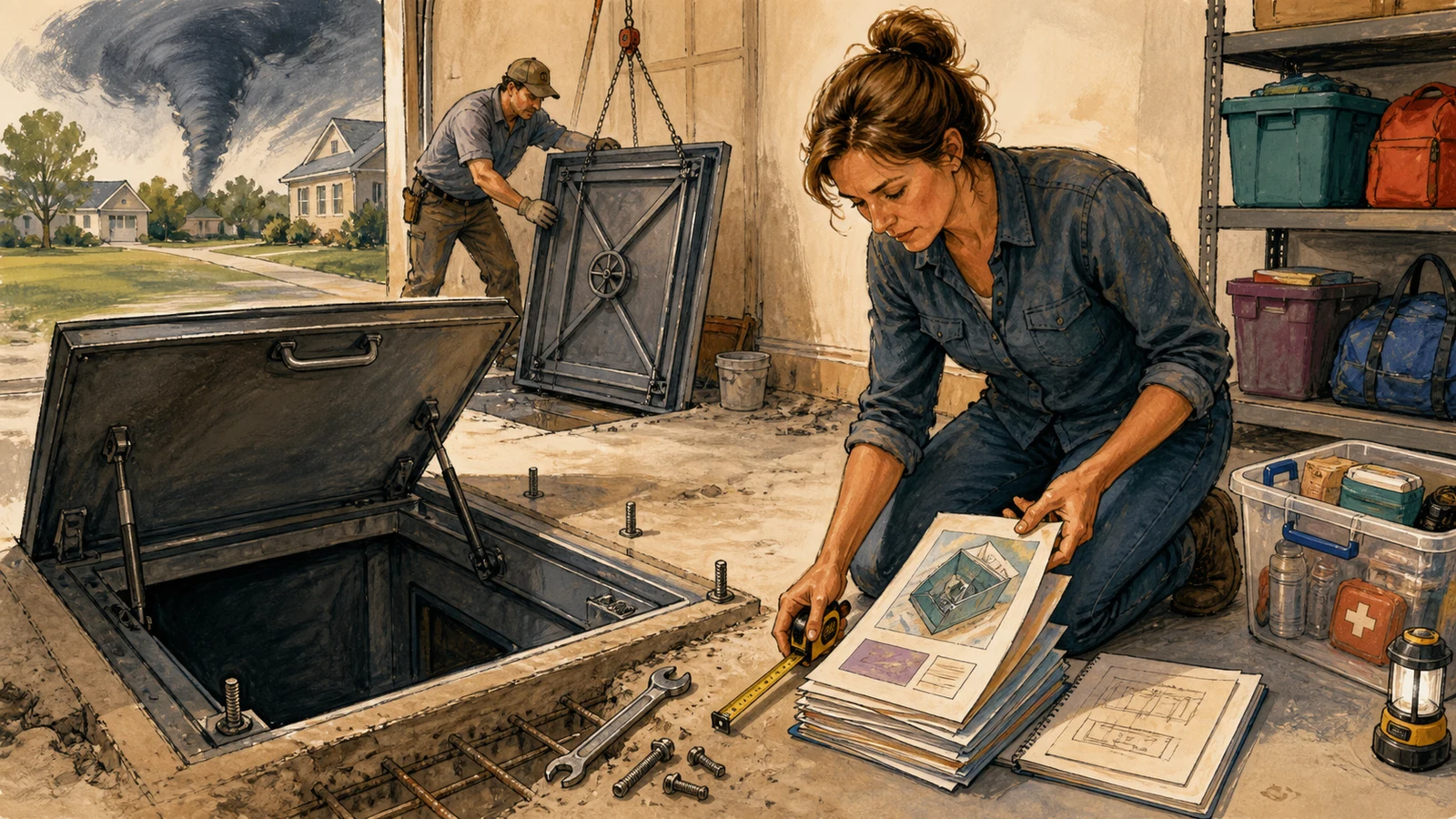
A tornado warning gives most people about thirteen minutes, and an interior hallway is not engineered to survive what comes next. This reference takes a homeowner from raw standards to a funded, installed place of refuge: what FEMA and ICC 500 criteria actually require, which shelter type fits the lot and the household, what installs cost, and which rebates and grants are worth chasing. Separate sections cover retrofitting an existing bathroom or garage slab, specifying shelters into new construction, verifying dealer ratings before paying, and the permit and inspection steps that keep rebates valid. Closing sections make the shelter usable — redundant warning channels, a stocked kit, timed drills — and settle the insurance questions most owners skip. Use it start to finish or jump straight to the section matching the decision on the table today.
What you'll do, step by stepFree preview
Only a sample is open: 4 of 24 steps can be read in full. The rest unlock when you buy.
Phase 1: What Counts as Real Protection
4 stepsPhase 2: Choosing Between Shelter Types
4 stepsPhase 3: Placement and Retrofit Planning
4 stepsPhase 4: Costs, Rebates and Financing
4 stepsPhase 5: Installing and Signing Off
4 stepsPhase 6: Warnings, Drills and Insurance
4 steps
Details
What you need first
Ownership of the home, or the owner’s written permission for permanent modifications. The property address and county, which feed the flood-zone and wind-speed lookups. Ability to read agency PDFs and call county offices. Research sections cost nothing; purchase sections assume a realistic spend of roughly $3,000–$8,000 or eligibility to apply for a rebate.